

Oura
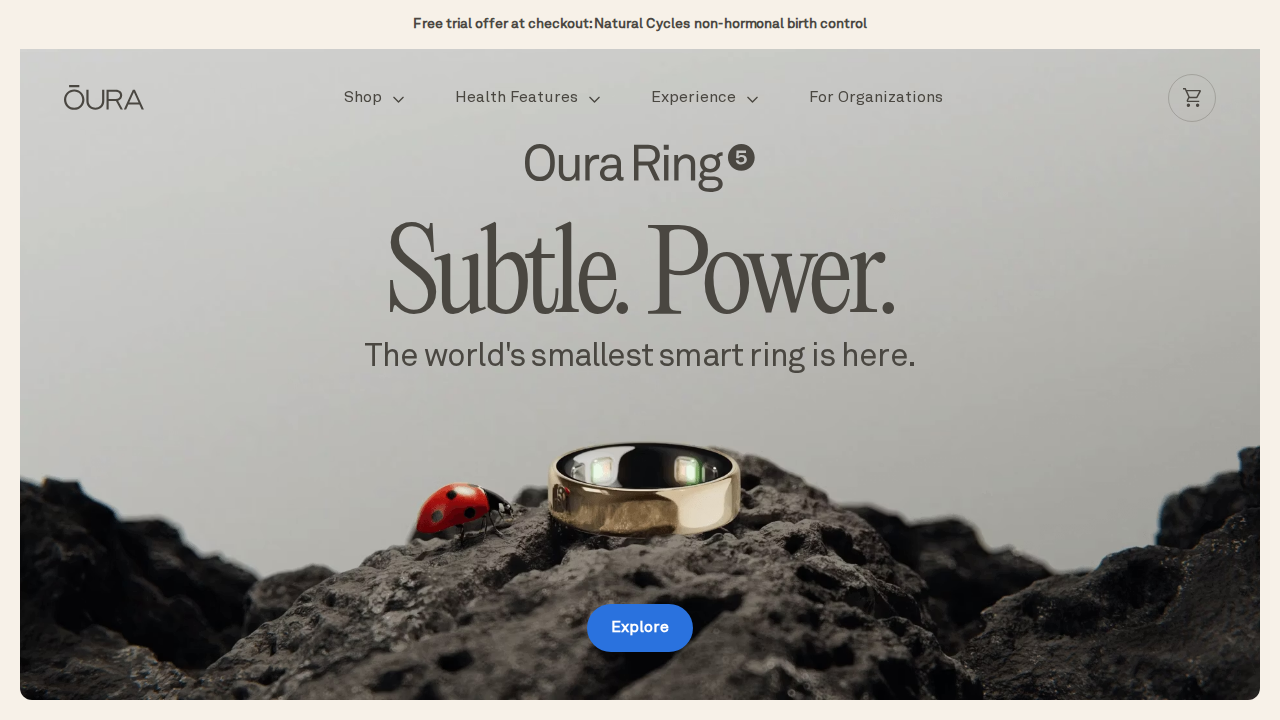
The Oura Ring is a titanium smart ring that tracks over 20 biosignals from the finger, including sleep st ages, heart rate variability (HRV), resting heart rate, body temperature deviation, SpO2, and respiratory rate. It generates daily Sleep and Readiness scores to help users understand recovery, optimize training, and detect early signs of illness. Now HSA/FSA eligible.
What is Oura?
The Oura Ring is a wearable sleep and recovery tracker designed as a lightweight titanium ring worn on the finger. Unlike wrist-based devices, the finger placement provides more stable access to pulse signals due to dense cap illary networks and reduced motion artifact. The ring continuously measures over 20 biosignals including heart rate, heart ra te variability (HRV), blood oxygen saturation (SpO2), respiratory rate, skin temperature deviation, and movement. Each mornin g, the Oura app delivers three core scores: a Sleep Score (0–100) based on total sleep time, efficiency, latency, and time sp ent in light, deep, and REM stages; a Readiness Score (0–100) aggregating sleep quality, HRV balance, resting heart rate tren d, body temperature deviation, and previous-day activity; and an Activity Score tracking steps, calories, and active minutes. HRV is measured at 5-minute intervals throughout the night, providing granular insight into autonomic nervous system balance. Body temperature deviation tracks changes from the user's personal baseline, useful for illness detection and cycle tracking. The ring syncs wirelessly with the Oura app via Bluetooth, and data is typically available by mid-morning after processing. U sers can access up to two years of historical data. The Oura Ring requires a membership subscription for full feature access and is available in multiple sizes and finishes.
Who is it for
- Athletes
- fitness enthusiasts — individuals who want to optimize training schedules by matching work out intensity to daily recovery
- readiness scores
- Biohackers
- health optimizers — users tracking HRV
- temperature tren ds
- sleep architecture to fine-tune lifestyle factors like diet
- supplements
- bedtime routines
- People with irregular sleep — shift workers
- parents
- or travelers who need detailed sleep staging
- trend analysis to identify what improves or harms their rest
- Women tracking cycles — individuals using nightly temperature deviation trends to monitor menstrual cycle p hases
- ovulation
- hormonal patterns
- Early illness detectors — users who leverage temperature spikes
- HRV drops as ear ly warning signals to prioritize rest before getting sick